Swakopmund & Costa dos Esqueletos
Namíbia
O poder das cores e do monocromático.
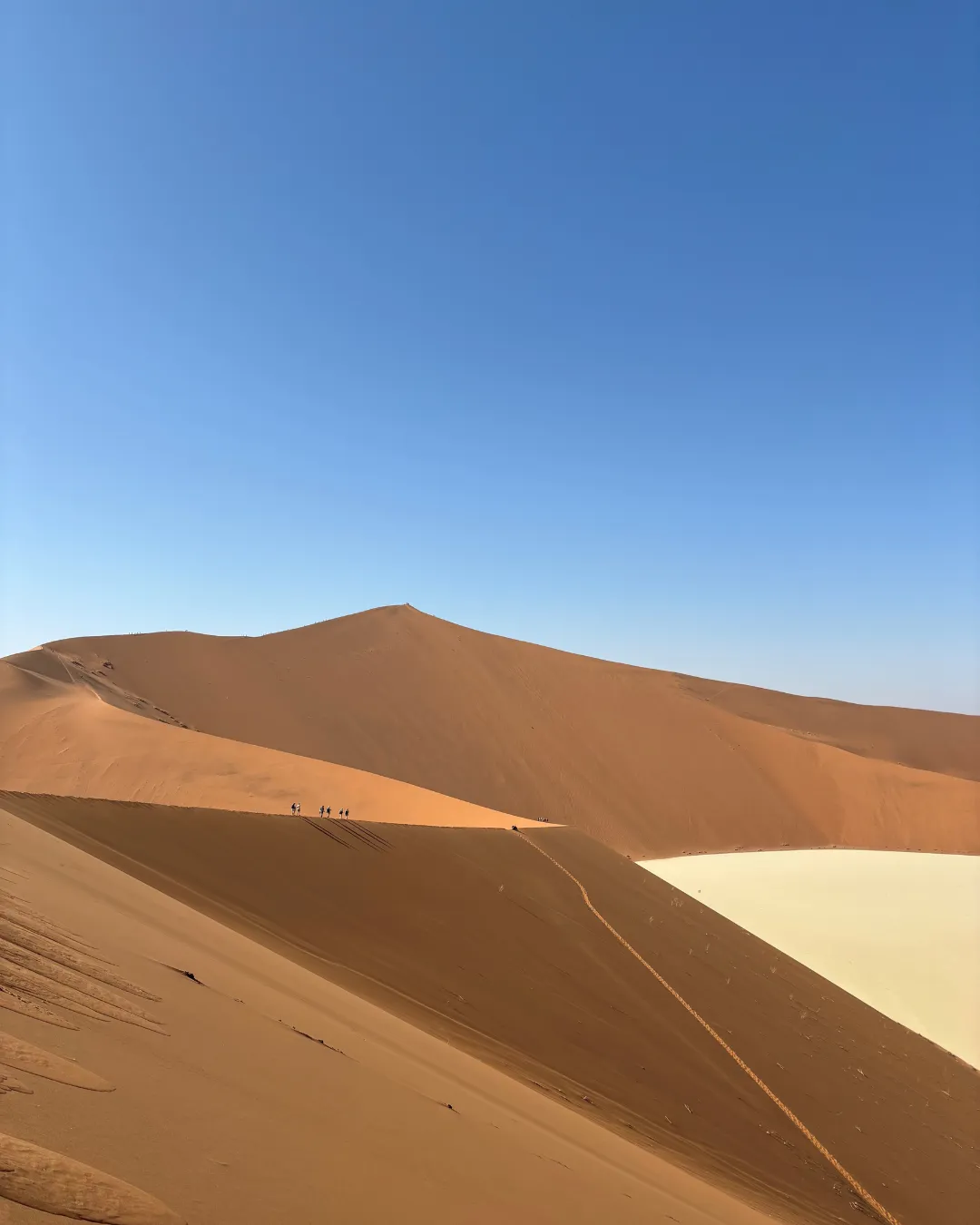
Não podiam ser dois ambientes mais diferentes. De um lado, em Swakopmund, o charme e o mimoso, as cores e o colorido; a vida. Do outro, o deserto, monocromático, árido, seco, severo, a escaldar. De tal forma infernal, que só podia terminar num lugar chamado Costa dos Esqueletos, e que é, também, o lugar onde os barcos vêm morrer.
Apesar do contraste, um e outro encontram-se próximos e na sua viagem pela Namíbia não deixe de os conhecer. Dificilmente encontrará no mundo dois lugares tão fora do comum. Inesquecíveis!
Swakopmund
Uma aventura em... Swakopmund.
Situada na foz do rio Swakop, Swakopmund é uma cidade que nem parece estar localizada em plena zona desértica. Claro que estar próxima do Atlântico, ajuda a que tenha uma atmosfera de zona balnear, com as suas casas coloridas de traça colonial alemã do início do século XX. Um encanto em estilo europeu, muito inesperado!
Um século depois, aqui não faltam bares e esplanadas, lojas, cafés e ótimos restaurantes a animar as ruas da cidade, que fazem de Swakopmund um destino de férias de eleição. E porque está entre o deserto e o mar, hoje, é conhecida como a ‘capital da aventura’. E, que aventuras? Tantas!
Fazer sandboard ou passeios de moto 4 nas enormes dunas; andar de jipe ou a cavalo na areia do deserto; experimentar paraquedismo ou paragliding para ver toda a beleza de cima; passear de barco em Walvis Bay e deslumbrar-se com os flamingos, pelicanos, golfinhos e, até, baleias; passear de bicicleta e muito mais!
É um local tranquilo que vale muito a pena, nem que seja só para se sentar e relaxar em frente ao mar. Que maravilha!
Costa dos Esqueletos
Bem-vindos ao fim do mundo.
Não muito longe de Swakopmund, a cerca de duas horas, encontra o início de uma terra inóspita e árida, onde as areias quentes e secas do deserto encontram as correntes frias do Atlântico, e onde as paisagens são, no mínimo, únicas: o Parque Nacional da Costa dos Esqueletos.
Os bosquímanos chamaram-lhe ‘A terra que Deus fez com raiva’; os navegadores portugueses que por aqui passaram no século XV, chamaram-lhe as ‘Portas do Inferno’. Dois nomes diferentes, mas que traduzem bem o espírito do lugar.
E parte desse espírito deve-se aos nevoeiros densos que se formam aqui, resultado do encontro do calor do deserto, com a fria e forte corrente de Benguela. Nevoeiros esses, que, impedindo a visibilidade, são responsáveis por tantos desastres que – por terra ou por mar - aqui tiveram lugar nesta costa e que lhe deram nome. Um verdadeiro cemitério de barcos e de ossos de baleias e outros animais a céu aberto, que se espalham ao longo da costa.
É um local inimaginável, com um ambiente difícil – até perigoso - a que só alguns animais, entretanto adaptados ao deserto, conseguem resistir.
O silêncio, os elementos, a imensidão, dão a este lugar uma carga emocional impressionante. É impossível alguém sentir-se poderoso perante o que aqui se vê. Ou não se vê. A natureza – o lado mais severo e cru da natureza - em todo o seu desafiador esplendor.







Swakopmund & Costa dos Esqueletos
KnowtoGo
What’s a Rich Text element?
The rich text element allows you to create and format headings, paragraphs, blockquotes, images, and video all in one place instead of having to add and format them individually. Just double-click and easily create content.
Static and dynamic content editing
A rich text element can be used with static or dynamic content. For static content, just drop it into any page and begin editing. For dynamic content, add a rich text field to any collection and then connect a rich text element to that field in the settings panel. Voila!
How to customize formatting for each rich text
Headings, paragraphs, blockquotes, figures, images, and figure captions can all be styled after a class is added to the rich text element using the "When inside of" nested selector system.
What’s a Rich Text element?
The rich text element allows you to create and format headings, paragraphs, blockquotes, images, and video all in one place instead of having to add and format them individually. Just double-click and easily create content.
Static and dynamic content editing
A rich text element can be used with static or dynamic content. For static content, just drop it into any page and begin editing. For dynamic content, add a rich text field to any collection and then connect a rich text element to that field in the settings panel. Voila!
How to customize formatting for each rich text
Headings, paragraphs, blockquotes, figures, images, and figure captions can all be styled after a class is added to the rich text element using the "When inside of" nested selector system.
What’s a Rich Text element?
The rich text element allows you to create and format headings, paragraphs, blockquotes, images, and video all in one place instead of having to add and format them individually. Just double-click and easily create content.
Static and dynamic content editing
A rich text element can be used with static or dynamic content. For static content, just drop it into any page and begin editing. For dynamic content, add a rich text field to any collection and then connect a rich text element to that field in the settings panel. Voila!
How to customize formatting for each rich text
Headings, paragraphs, blockquotes, figures, images, and figure captions can all be styled after a class is added to the rich text element using the "When inside of" nested selector system.
What’s a Rich Text element?
The rich text element allows you to create and format headings, paragraphs, blockquotes, images, and video all in one place instead of having to add and format them individually. Just double-click and easily create content.
Static and dynamic content editing
A rich text element can be used with static or dynamic content. For static content, just drop it into any page and begin editing. For dynamic content, add a rich text field to any collection and then connect a rich text element to that field in the settings panel. Voila!
How to customize formatting for each rich text
Headings, paragraphs, blockquotes, figures, images, and figure captions can all be styled after a class is added to the rich text element using the "When inside of" nested selector system.
What’s a Rich Text element?
The rich text element allows you to create and format headings, paragraphs, blockquotes, images, and video all in one place instead of having to add and format them individually. Just double-click and easily create content.
Static and dynamic content editing
A rich text element can be used with static or dynamic content. For static content, just drop it into any page and begin editing. For dynamic content, add a rich text field to any collection and then connect a rich text element to that field in the settings panel. Voila!
How to customize formatting for each rich text
Headings, paragraphs, blockquotes, figures, images, and figure captions can all be styled after a class is added to the rich text element using the "When inside of" nested selector system.
What’s a Rich Text element?
The rich text element allows you to create and format headings, paragraphs, blockquotes, images, and video all in one place instead of having to add and format them individually. Just double-click and easily create content.
Static and dynamic content editing
A rich text element can be used with static or dynamic content. For static content, just drop it into any page and begin editing. For dynamic content, add a rich text field to any collection and then connect a rich text element to that field in the settings panel. Voila!
How to customize formatting for each rich text
Headings, paragraphs, blockquotes, figures, images, and figure captions can all be styled after a class is added to the rich text element using the "When inside of" nested selector system.